Learn how to make silky smooth Asian rice porridge (Congee). It can be done on the stove, rice cooker or Instant Pot.
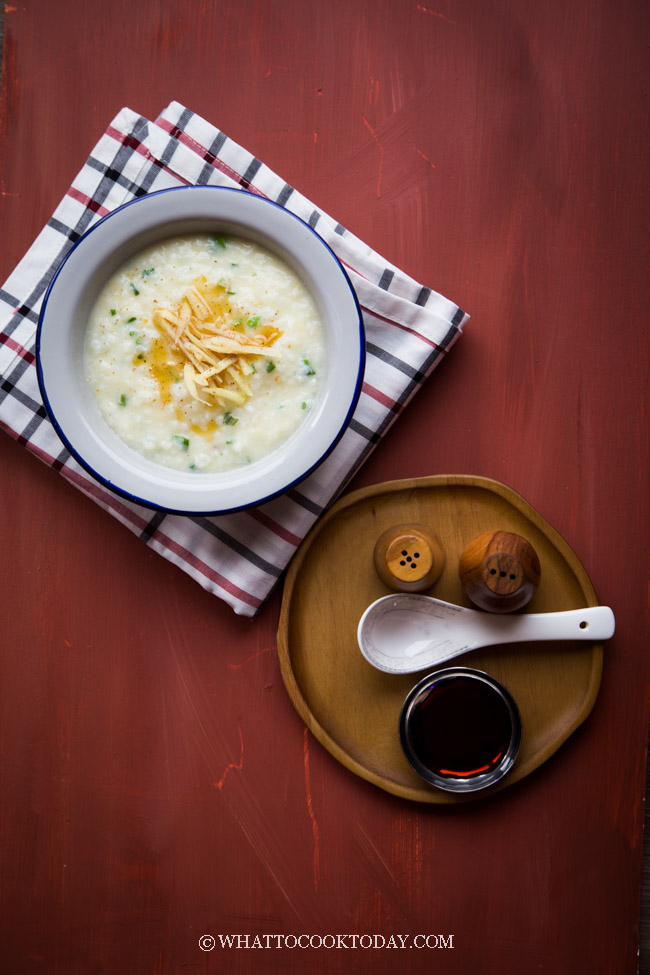
How to Make Basic Asian Rice Porridge (Congee)
BASIC CHINESE CONGEE (JOOK)
Making congee or known as jook in Cantonese, is pretty common in our household. I often make it for breakfast. I decided to write this post because I used to not sure how much water I needed to add in to get the result I wanted. The consistency of the porridge can vary depending on the amount of water or stock you add in. I personally like a medium thick to medium thin porridge. Some people like a thin porridge. So, I thought I might share this basic part of making Asian rice porridge using white rice.
THE BEST RICE TO MAKE CONGEE
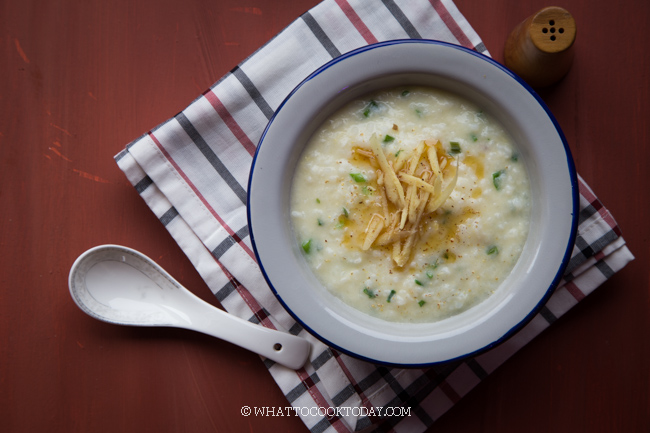
I suggest using a more “starchy” rice such as jasmine rice (long-grain) and japonica rice (medium-grain). These two are perfect to make congee as it will give your congee a smooth, starchy and silky texture. Rice such as basmati rice doesn’t “gel” as much when you use it to cook porridge. The rice grain will most likely remain intact. If you still want to use basmati rice, I suggest pulsing it few times in a blender or food processor to break up the grains a bit before cooking. Do not turn it into a powder though
HOW MUCH WATER OR STOCK TO COOK CONGEE
Everybody has a different preference when it comes to the consistency of porridge. I myself prefer a rice:liquid ratio between 1:9 to 1:10. Remember that the longer the congee sits, the thicker it becomes as it continues to absorb water.
This porridge is made with 1:7 ratio
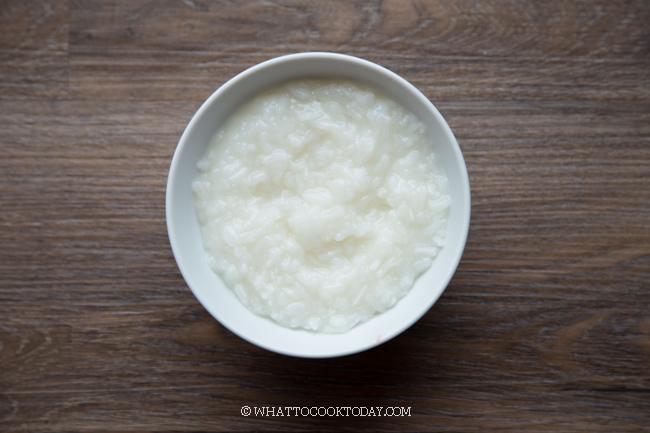
Rice : liquid ratio = 1:7
This porridge is made with 1:8 ratio
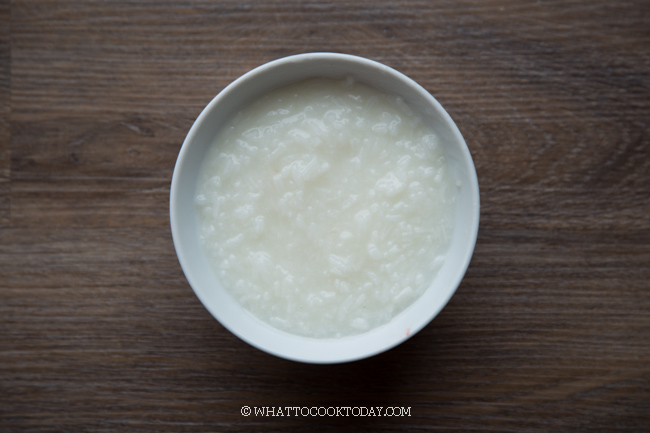
Rice : liquid ratio = 1:8
This porridge is made with 1:9 ratio
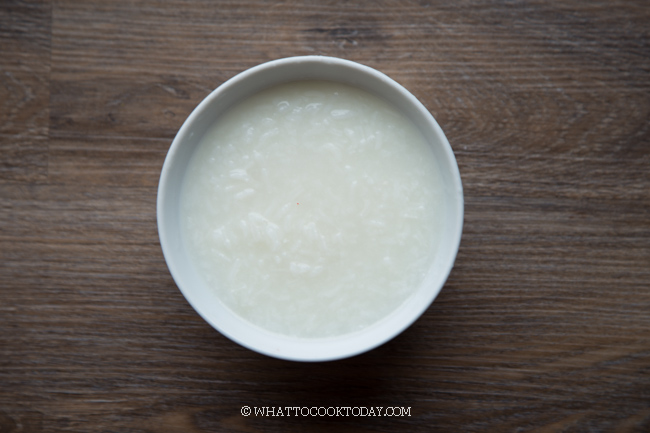
Rice : liquid ratio = 1:9
This porridge is made with 1:10 ratio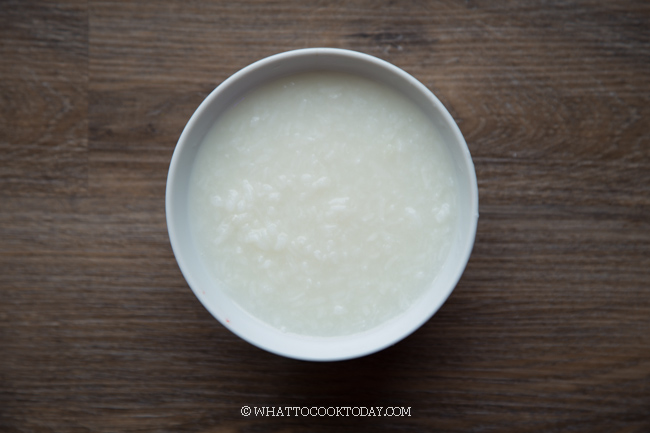
The 1:10 ratio may seems a bit thin at first, but after 10 minutes, the consistency has thickened even more (photo below), which is the consistency I like.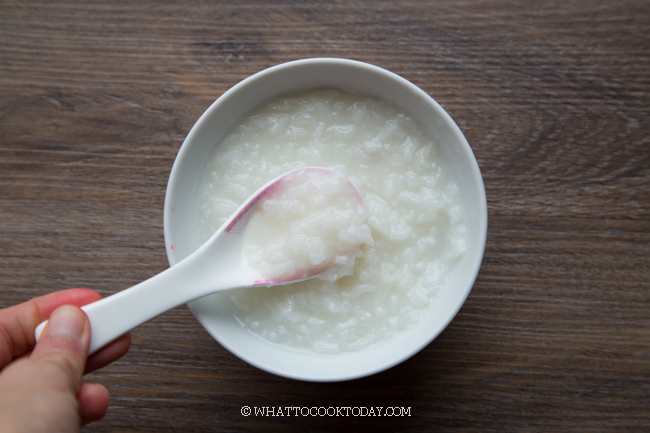
HOW TO MAKE EASY CONGEE AT HOME
1. Just briefly rinse your rice
You want the starch in the rice as much as you can to thicken up the porridge nicely. This will give the congee a smooth and “creamy” consistency. Rinsing the rice is mainly just to get rid of impurity (if any)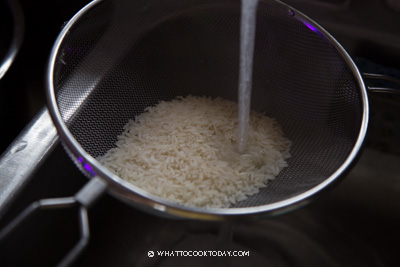
2. Choose the rice : liquid ratio you like (as I mentioned above) and bring the liquid to a boil and add the rice in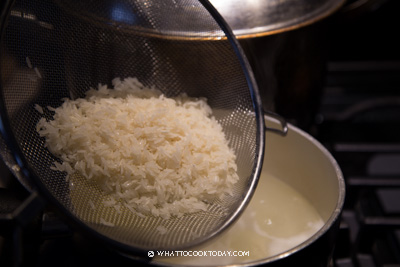
3. Bring it back to a boil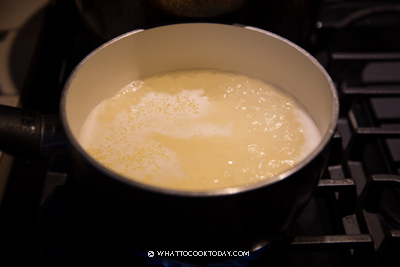
4. Stir it every now and then to prevent the rice from catching at the bottom of the pot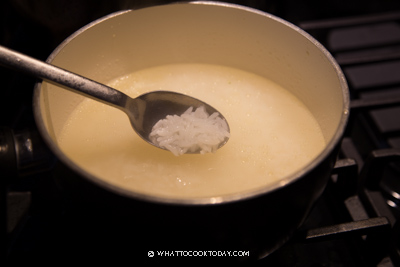
5. It will continue to get thicker as the starch releases from the rice grains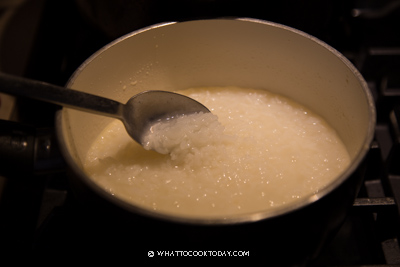
6. Once you are happy with the consistency, if you want to add a protein like ground pork, fish, chicken, etc, add it at this point and cook until the meat is cooked through. Season with salt to your taste if you want

댓글
댓글 쓰기